
Roof Lantern Blinds That Actually Work
- Tim Watkins

- May 8
- 6 min read
A roof lantern looks impressive - right up until the room turns into a greenhouse by midday, the glare hits every screen, and the space you paid to improve becomes awkward to use. That is usually the point when homeowners start looking seriously at roof lantern blinds, not as a finishing touch, but as a practical fix.
In bright kitchens, extensions, orangeries and commercial spaces, overhead glazing can bring in excellent natural light. It can also create real problems. Too much solar gain in summer, uncomfortable brightness through the middle of the day, and a lack of control over how the room feels from morning to evening are the main complaints we hear. The right blind changes that quickly.
Why roof lantern blinds matter
A roof lantern is designed to draw light in from above, which is exactly why it needs proper shading. Vertical windows are easy to manage with standard blinds or shutters, but lantern glazing sits at a different angle and takes the full force of the sun. That means the heat and glare can be far more intense than many people expect.
Roof lantern blinds give you control back. They help soften harsh light, make rooms more comfortable to sit in, and protect the look and function of the space. If you use the room for cooking, dining, working, entertaining or simply relaxing, that control makes a noticeable difference.
There is also the question of usability. Many customers invest in a stylish extension and then avoid sitting in it during the hottest part of the day. A room that looks good but is too bright or too warm is not doing its job. The blind is what makes the glazing practical.
What good roof lantern blinds should do
Not every solution performs in the same way. A good-looking blind that struggles with heat or sags over time is rarely good value. For a roof lantern, performance matters just as much as appearance.
Good roof lantern blinds should manage glare without making the room feel gloomy. They should help reduce solar heat gain, sit neatly within the shape of the lantern, and operate smoothly day after day. Because these blinds are fitted overhead, they also need to look tidy from below. Poor fit is much more obvious on a roof lantern than on a standard window.
This is why bespoke measuring matters. Roof lanterns vary in shape, pitch and size, and even small measuring errors can affect how the finished blind looks and works. A made-to-measure system gives a cleaner finish and a far better result than trying to adapt an off-the-shelf option to a specialist glazing structure.
Choosing the right solution for your space
The best option depends on the room, how you use it and what problem you are trying to solve first. Some customers are mainly focused on summer heat. Others are more concerned about glare across a dining table, television or workstation. In some properties, style is just as important as performance because the lantern sits at the centre of the room.
Pleated systems are a popular choice for roof lanterns because they suit angled glazing well and provide a neat, tailored look. They work particularly well where you want a smart architectural finish without adding bulk. In many homes, they strike the right balance between light control and visual appeal.
Motorised operation is also worth considering, especially for larger lanterns or hard-to-reach installations. If a blind is awkward to use, people tend not to use it properly. A motorised system keeps operation simple and encourages regular adjustment throughout the day, which means you get more value from the product.
There is always a trade-off between maximum blackout and softer filtered light. In most kitchen extensions and living areas, complete darkness is not the goal. The aim is usually to reduce glare and heat while keeping the room bright and welcoming. That is why fabric choice matters as much as the blind system itself.
Style still matters - but function comes first
A roof lantern sits in one of the most visible parts of a room, so the blind has to work visually with the rest of the space. Clean lines, an uncluttered fit and the right fabric colour all help the finished installation feel part of the design rather than an afterthought.
Lighter shades are often chosen to keep the space feeling open and airy, while more muted or darker tones can create a stronger design feature. Neither is automatically right. It depends on the overall scheme, the amount of direct sun the room receives, and whether you want the blind to blend in or stand out.
That said, appearance should not come at the expense of performance. A very sheer fabric may look elegant, but if the room is exposed for most of the day, it may not solve the problem that prompted the enquiry in the first place. The best result usually comes from balancing the finish you want with the level of control you actually need.
Roof lantern blinds in kitchens, extensions and commercial spaces
In kitchen extensions, the issue is often heat build-up combined with strong light over dining and prep areas. A well-fitted blind makes the room feel calmer and more comfortable, especially during spring and summer when overhead sun can become relentless. If the lantern faces south or west, shading becomes even more important.
In orangeries and garden rooms, the challenge is often about making the space usable for longer periods. Without shading, these rooms can swing from too hot in summer to uncomfortably bright all year round. The right blind helps even things out so the room earns its keep.
For commercial settings, the priorities are usually glare reduction, presentation and ease of operation. Meeting rooms, receptions and office spaces with roof glazing benefit from better screen visibility and a more controlled environment. Clients and staff notice comfort quickly, even if they never think about the blind itself.
Why measuring and fitting make such a difference
With standard windows, small fitting issues can sometimes be hidden. With overhead glazing, they cannot. Uneven lines, poor tension, awkward operation and fabric that does not sit correctly are all far more visible when the blind is installed above eye level.
That is why professional measuring and fitting are not extras. They are part of getting the result right. A roof lantern needs a solution built for its exact dimensions and fitted by someone who understands how to work with the structure properly.
This is also where service matters. Customers want a product that looks smart, works well and does not turn into a drawn-out project. Free measuring, free fitting and UK-made blinds help remove uncertainty from the process. For many households and businesses, convenience is just as valuable as the product itself.
When another shading option may suit better
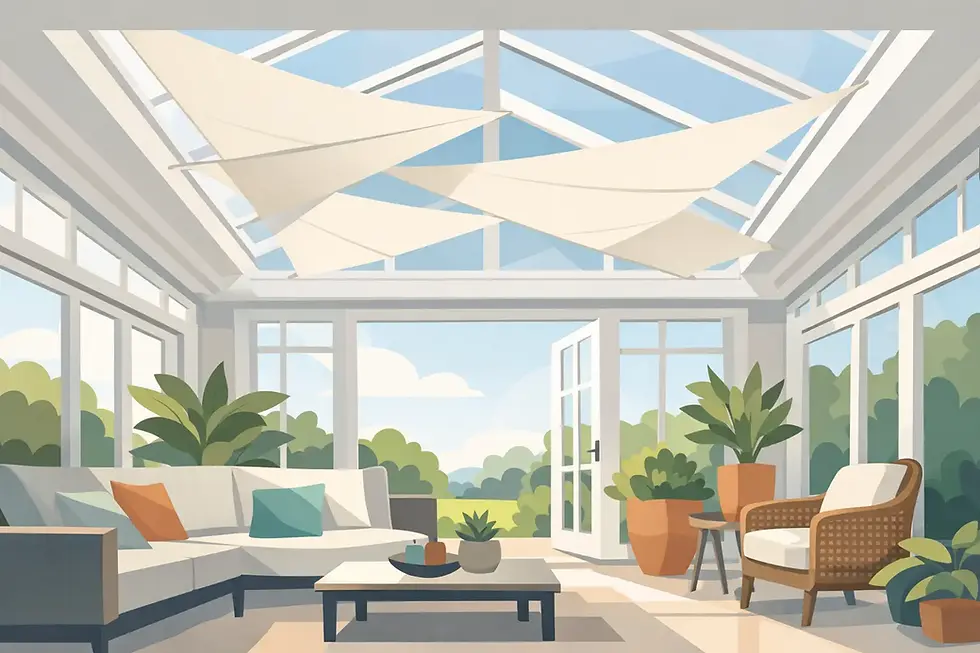
It is worth being honest here - roof lantern blinds are not the only answer for every glazed overhead space. In some conservatories or larger glass roofs, sail-style shading can offer a very effective alternative, particularly where heat reduction is the main priority and a softer fabric feature works better with the room.
That is not a drawback. It simply means the best solution should match the structure. Some spaces benefit most from a traditional blind system. Others work better with a tensile shading option designed to reflect heat, reduce glare and stay easy to maintain. A good supplier should tell you which route makes the most sense rather than pushing the same product every time.
Getting long-term value from roof lantern blinds
The cheapest quote is not always the best buy. With roof lantern blinds, long-term value comes from accurate fitting, reliable components, quality fabric and a finish that still looks right after years of use. If the blind solves the heat and glare problem properly, you feel the benefit every sunny day.
It also adds value in a less obvious way by improving how the room is used. People spend more time in spaces that feel comfortable. Extensions become true living areas rather than showpieces. Offices become easier to work in. Restaurants and hospitality spaces become more pleasant for customers. The effect is practical, but it changes the whole experience of the room.
For homeowners and commercial buyers alike, the key is choosing a bespoke solution rather than treating overhead glazing like any other window. That is where specialist advice pays off. A well-made, well-fitted blind should look good from day one, but more importantly, it should keep doing the job when the sun is at its strongest.
If your roof lantern is giving you more glare and heat than usable light, the fix does not need to be complicated. The right shading turns the room back into the space it was meant to be.


Comments