
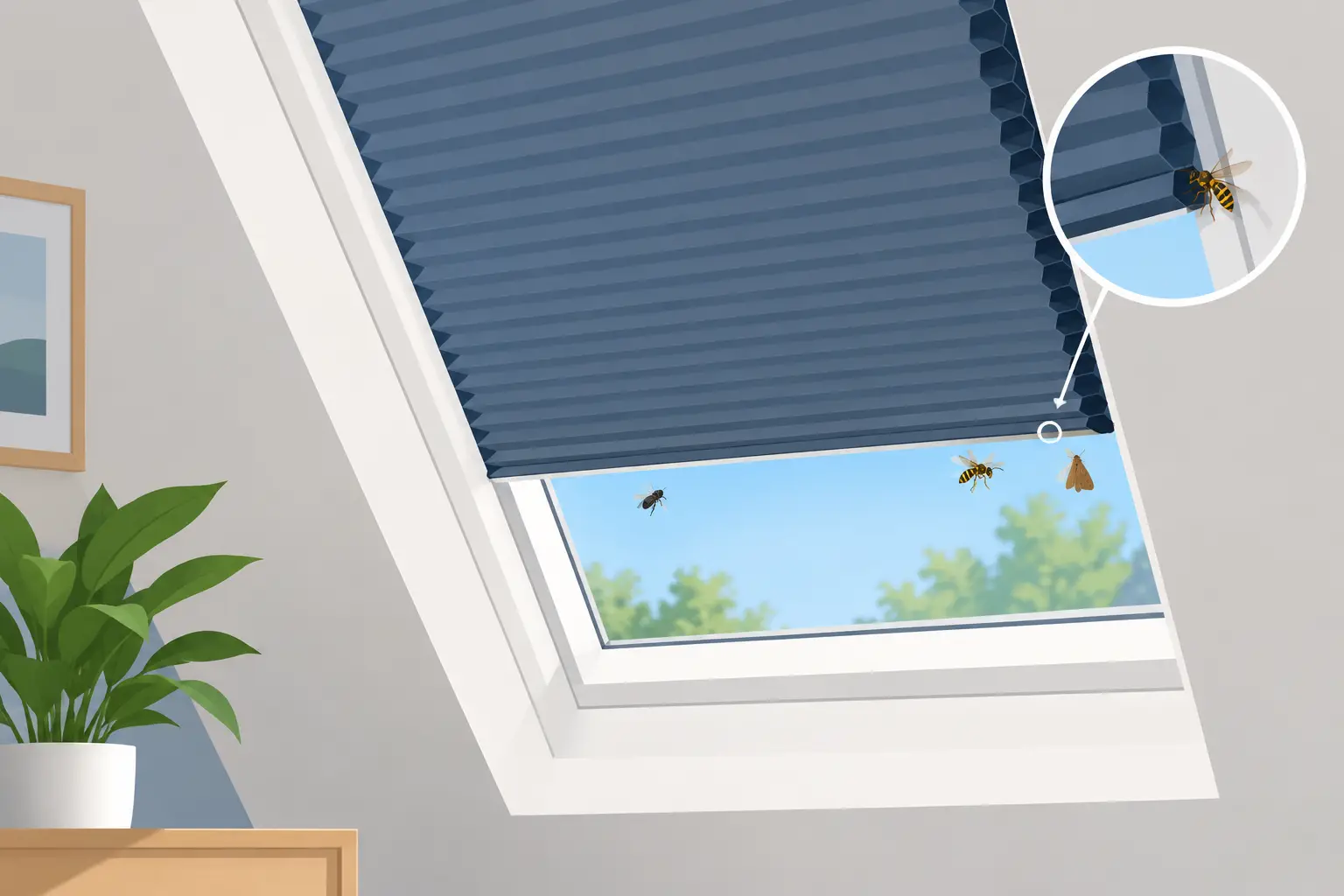
Problems With Insects Getting Inside Thermal Roof Blinds

A few flies or ladybirds trapped above a roof blind may seem like a minor nuisance at first. But the problems with insects getting inside thermal roof blinds can become far more noticeable once they collect in hard-to-reach areas, leave marks on the fabric or affect how smoothly the blind operates. In a conservatory that is already dealing with heat, glare and awkward roof glazing, it is a frustrating extra job that nobody wants.
Thermal roof blinds are designed to improve comfort by reducing solar gain and glare. They are not, however, sealed insect barriers. Their installation usually includes small clearances around the edges, guide wires, rails or operating components. Those spaces can be enough for insects to enter, particularly when windows, roof vents or doors are open during warmer weather.
Why insects get inside thermal roof blinds
Conservatories and glazed extensions are naturally attractive to insects. They are bright, warm and often surrounded by gardens, shrubs or flowering plants. When sunlight hits the roof glass, the area between the glazing and blind can become warmer than the room below it, creating a sheltered space for small insects to settle.
The route in is rarely through the fabric itself. More commonly, insects enter through gaps at the perimeter of the blind, around the headrail or where guide wires meet the roof frame. Even a carefully measured blind needs enough movement clearance to raise, lower or tension correctly. Trying to eliminate every gap can cause rubbing, snagging and poor operation.
This is why the issue can be more apparent with roof blinds than vertical or roller blinds at a standard window. A roof blind sits overhead, often close to glass that is difficult to reach for cleaning. Once an insect has found its way behind it, it may remain out of sight until a cluster of marks, wings or debris becomes visible in strong daylight.
The problems insects can cause inside roof blinds
The most immediate problem is appearance. Dead flies, small spiders, moths and pollen-carrying insects can be clearly visible through pale or translucent fabrics. They cast shadows on the material and can make an otherwise clean, well-kept conservatory look neglected.
Insects can also leave spots and residue on the blind fabric or glass. Depending on the material and how long the marks have been left, cleaning may not always restore the original finish. Pleated and cellular thermal fabrics need particularly careful handling. Excessive rubbing, harsh cleaning products or soaking can damage coatings, alter the pleats or leave water marks.
There is also the practical issue of debris. Insects do not arrive alone. Dust, cobwebs, pollen and small leaves can gather in the same channels and recesses. Over time, that build-up can interfere with moving parts, especially on manually operated systems with cords, tensioned wires or rails. Motorised blinds are generally neat and convenient to use, but they still need clear tracks and correctly aligned components to perform at their best.
In most cases, insects will not cause structural damage to a quality roof blind. The concern is usually cleanliness, appearance and maintenance rather than a complete failure of the system. However, repeated build-up should not be ignored. If a blind begins to catch, sit unevenly or make more noise than usual, it is sensible to have the installation checked rather than forcing it.
Thermal roof blinds are not always the easiest option
A thermal roof blind can be an effective solution when you need close-fitting shading at the glass. The insulating properties of specialist fabrics can help reduce glare and make a sunny conservatory more comfortable. For some roof shapes and customer requirements, they remain the right choice.
The trade-off is access. Roof blinds are often positioned high above the room, with the fabric sitting close to the glazing. Cleaning between the blind and glass may involve lowering or removing sections of the system, depending on its design. In a large conservatory or a roof with many individual panes, this can become time-consuming.
This does not mean every thermal roof blind will develop an insect problem. A well-fitted system, regular cleaning and sensible ventilation will reduce the risk. But if easy seasonal removal and straightforward cleaning are priorities, it is worth considering whether another style of conservatory shading better suits the space.
How to reduce insects behind conservatory roof blinds
The best approach is prevention combined with routine maintenance. Start by keeping the roof and window frames clean, particularly around vents, joints and opening sections. Pollen, cobwebs and plant debris provide cover for insects and make the space behind blinds less pleasant to clean later.
Check any obvious entry points around opening windows, roof vents and doors. Worn seals should be repaired, and insect screens can be useful where windows are regularly left open in summer. Do not apply sealant around the edges of a roof blind unless the installer specifically recommends it. A blind needs room to operate, and sealing it in can create more problems than it solves.
It also helps to manage the area immediately outside the conservatory. Dense climbing plants, overhanging branches and bright outdoor lights close to the roof can increase insect activity around the glass. You do not need to strip the garden back, but keeping foliage away from the frames makes a difference.
For the blinds themselves, use a soft brush attachment or a dry microfibre cloth for regular dusting. Avoid aggressive vacuuming on delicate pleated fabrics. If you can see insects or dirt behind the blind, do not pull forcefully on the fabric or attempt to dismantle tensioned parts without guidance. The right cleaning method depends on the blind type, its fabric and how it is fitted.
When a conservatory sail may be the practical alternative
For many conservatories, a bespoke sail blind provides a simpler answer to heat and glare without placing fabric directly against every roof pane. Conservatory sails are fitted below the glazing and can be removed seasonally for cleaning, storage or access. That makes it easier to deal with insects, dust and cobwebs before they become a bigger issue.
A well-designed sail system still delivers strong solar performance. Blinds and Sails' conservatory sail blinds can reflect up to 70% of heat while reducing glare, helping the room feel more usable through bright summer days. Because the sails sit within the room rather than in narrow spaces against the roof glass, they can also be easier to wipe down and maintain.
There are trade-offs. A sail blind does not create the same pane-by-pane, close-to-glass appearance as a thermal roof blind, and the final look depends on roof shape, ceiling height and how the conservatory is used. Yet for homeowners who want attractive shading, good heat control and less awkward maintenance, it is often a strong lower-cost alternative.
Getting the fit right matters
Poor fitting can make insect access and cleaning difficulties more noticeable, but even the best installation cannot turn a moving blind into a fully sealed screen. A professional survey is valuable because it considers roof shape, opening windows, vents, operating clearances and how you intend to use the room.
It is also the chance to discuss the practical details that matter after fitting: whether the blind can be removed, how it should be cleaned, what happens around roof vents, and which fabric will look best against the glass. Bespoke shading should improve everyday comfort, not leave you with an overhead feature that is difficult to live with.
If insects are already visible behind your thermal roof blinds, deal with the build-up before it becomes embedded in the fabric or tracks. Then consider whether your current system is still the best match for your conservatory. The most effective shading solution is one that controls heat and glare while remaining easy to keep clean, season after season.


Comments