
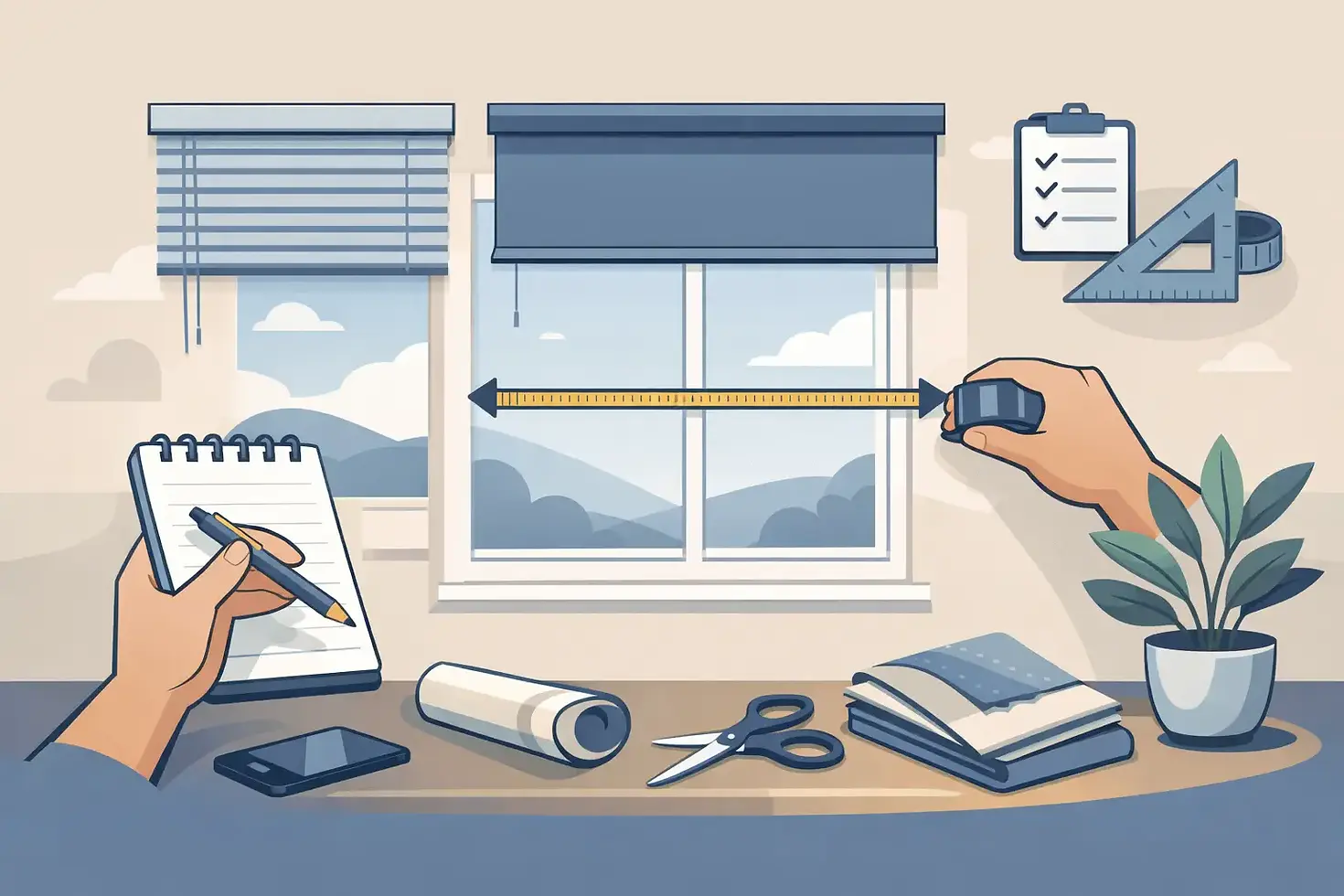
How to Measure Windows for Bespoke Blinds

A blind can look spot on in the fabric book and still disappoint once it is fitted - and nine times out of ten, poor measuring is the reason. If you want to measure windows for bespoke blinds properly, the goal is simple: get a clean fit, smooth operation and a finish that looks made for the room, because it is.
The tricky part is that there is no single measuring method for every blind or every window. A roller blind in a neat recess is measured differently from a Roman blind sitting outside the recess, and a conservatory roof or awkward glazing shape brings its own considerations. Getting the numbers right at the start saves time, avoids costly remakes and helps you choose the right product for the space.
Before you measure windows for bespoke blinds
Start with a steel tape measure rather than a cloth one. Cloth tapes can flex, and even small inaccuracies matter when a blind is being made to size. Measure in millimetres, not centimetres, and write every figure down as you go. It also helps to note which room and which window you are measuring, especially if you are planning several blinds at once.
Before taking any measurements, decide whether the blind will sit inside the recess or outside it. That choice changes everything. A recess fit places the blind within the window opening for a neat, built-in look. An exact fit places the blind on the wall or frame outside the recess, which is often better if you want to block more light or cover a shallow or uneven opening.
Look carefully at the window itself. Check for handles that protrude, tiles that narrow the recess, alarm sensors, vents and any trim that could interfere with the blind. Old properties and bay windows often look square at first glance but can be noticeably uneven once measured. That is why width should always be taken in three places, and so should drop.
Measuring for a recess fit
If you want the blind to sit inside the window recess, measure the width at the top, middle and bottom of the opening. Then measure the drop on the left, centre and right. Use the smallest width and the smallest drop. That gives you the best chance of a good fit where the blind can operate without rubbing against the sides.
Do not make your own deductions unless the supplier specifically asks you to. With bespoke blinds, the allowance is often built into the manufacturing process depending on the blind type. Sending adjusted figures when exact recess measurements are expected is a common mistake, and it can leave you with gaps or a blind that feels undersized.
Recess fitting suits many roller, Venetian and pleated blinds, particularly where you want a tidy finish. It can also work well in kitchens and offices where keeping the blind within the opening helps maintain clean lines. The trade-off is that recess blinds usually let in a little more light at the edges than exact fit blinds, so if blackout performance matters, this may not be the strongest option.
When a recess is not truly square
Not every recess deserves a recess blind. If the width varies a lot from top to bottom, if plaster bows inward, or if the window handle pushes too far forward, an inside fit may cause problems. In those cases, fitting outside the recess can give you a cleaner result and better day-to-day use.
This comes up regularly in older homes, converted properties and some commercial spaces. A bespoke blind should solve a problem, not highlight an uneven opening.
Measuring for an exact fit
For an exact fit, measure the area you want the blind to cover rather than the inside of the opening. Start with the width. As a rule, extend beyond each side of the recess to reduce light gaps and improve privacy. For the drop, decide whether you want the blind to finish just below the sill, sit on the sill, or run lower to create more visual height.
This method is often the better choice for blackout roller blinds, Roman blinds and windows with shallow recesses. It can also make a smaller window look larger because the blind sits proud of the opening and frames it more generously. In bedrooms, it is usually the more effective option if light control matters.
You do need to allow for practical details. Make sure there is enough wall space for brackets. Check that the blind will clear handles when raised and lowered. If you are fitting above the recess, measure from the exact point where the brackets will be installed rather than estimating from the top of the frame.
How blind type affects measuring
Different products need slightly different thinking, even when the basic measuring method is similar.
Roller blinds are fairly straightforward, but you need to know that the fabric width is usually narrower than the overall blind size because of the mechanism. That matters if you are trying to minimise edge light. Roman blinds tend to be more decorative and are often fitted outside the recess, as they stack when raised and can take up room at the top of the window.
Venetian blinds need enough clearance for slats to tilt freely, especially within a recess. If the handle projects, it can catch. Vertical blinds are often used for larger windows and doors, where overall coverage matters more than sitting tightly inside the opening. Perfect Fit blinds are a different category again, as they clip neatly into certain uPVC windows and doors, so the glass size and bead depth matter more than the full recess.
For shaped glazing, roof lanterns and conservatories, standard methods rarely tell the full story. These are spaces where accurate survey work makes the difference between a product that looks improvised and one that performs properly through the seasons.
Conservatories and awkward windows
Conservatories are one of the easiest places to measure badly because there are so many variables - roof sections, doors, side panels, angles, bars and changing light. It is also the room where performance matters most. If heat build-up, glare and poor usability are the problem, the measurements have to support the right solution rather than just filling the glass.
That is especially true with sail blinds. A well-made conservatory sail needs to follow the glazing layout accurately and tension correctly to do its job. When measured and fitted properly, it can help reflect heat, reduce glare and make the space more comfortable without the cost of more complex blind systems. It is a practical option for homeowners who want bespoke shading that works hard and still looks smart.
Roof lanterns and bifold door areas also need care. There may be obvious glass sizes, but bracket positions, frame depths and opening clearances all affect the final fit. If a window is unusual, measuring is not the stage to guess.
Common measuring mistakes to avoid
Most problems come from rushing. People round figures up, measure in centimetres, record width and drop the wrong way round, or assume every window in the same room is identical. Even modern homes can have small variations between supposedly matching openings.
Another frequent issue is forgetting the obstructions. Handles, trickle vents, tiles, skirting, radiators and alarm contacts all affect where a blind can sit and how it moves. A blind that fits on paper but catches every time you use it is not a good fit.
There is also the temptation to choose a measuring method based on appearance alone. A recess fit may look neat, but if it leaves too much light around the edges, it is the wrong choice for a bedroom. An outside fit may cover more effectively, but if there is not enough wall space or the stack interferes with a door, it may not suit the room. Good measuring is never separate from how the blind needs to perform.
When professional measuring is the better option
There is nothing wrong with measuring your own windows if they are straightforward and you are confident. But for bay windows, conservatories, shaped glazing, commercial spaces or any room where several blinds need to line up neatly, professional measuring usually pays for itself in accuracy alone.
This is where a full service makes life easier. Blinds and Sails offers free measuring and free fitting, which removes much of the guesswork and gives you a clear route from quote to installation. For many customers, that convenience is as valuable as the blind itself, particularly when the product is being made to order and needs to perform properly from day one.
The best measuring advice is simple: treat each window as its own project. Measure carefully, choose the fit style based on how the room is used, and do not force a standard solution onto an awkward space. A bespoke blind should feel like the obvious answer once it is installed - and that starts long before the fitting day.


Comments